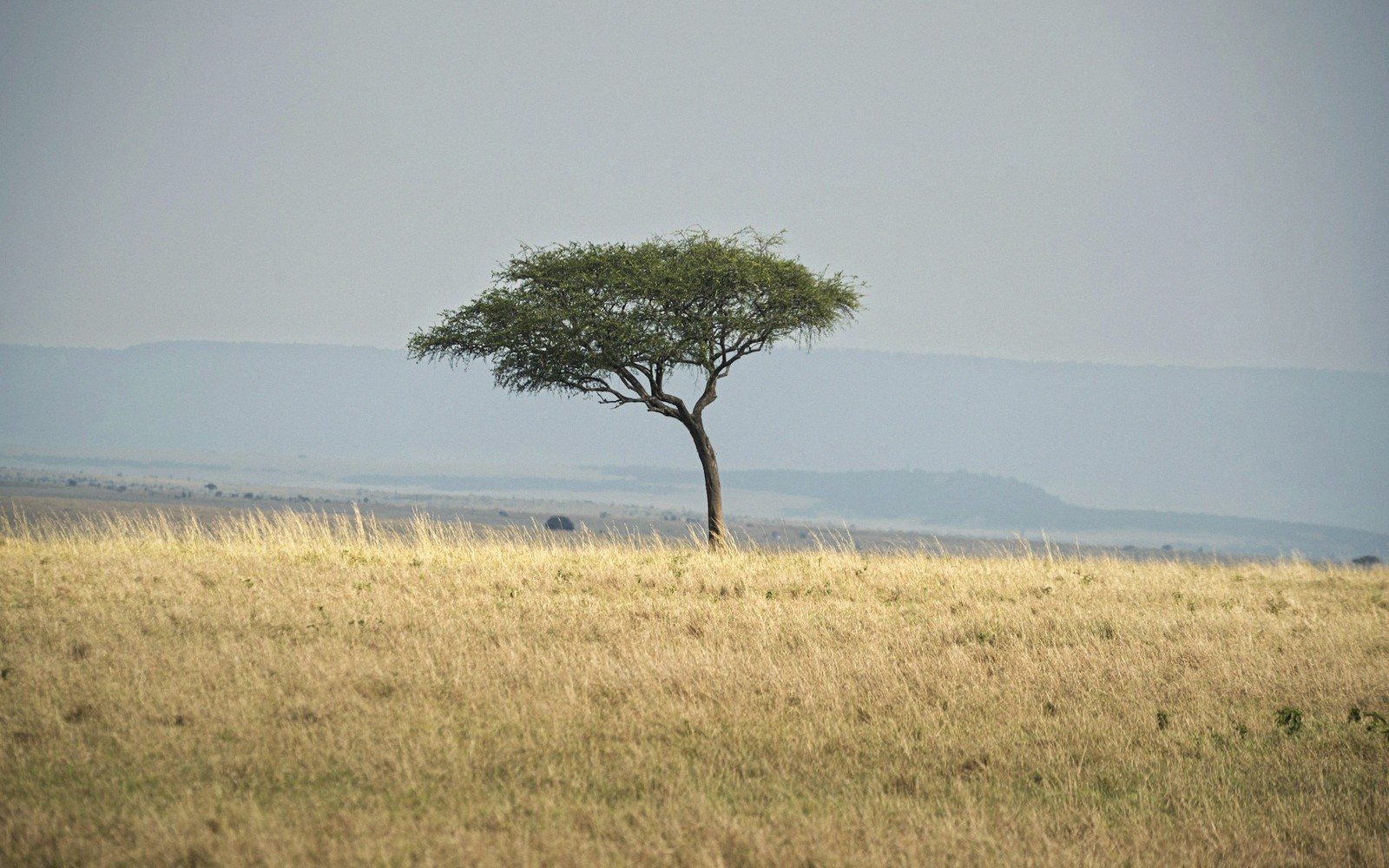
Kenya's wildlife is not a single spectacle but a mosaic — shaped by the country's extraordinary range of habitats. From equatorial forest and high moorland to open savannah, semi-arid scrub and coastal mangrove, the country packs an improbable breadth of ecosystems into a relatively compact territory. That ecological diversity is the real reason Kenya's flora and fauna are so extraordinary: different landscapes stack different conditions, and different conditions produce different life.
The Big Five — and the broader cast
The lion, leopard, elephant, buffalo and rhinoceros are collectively known as the Big Five — a term coined by big-game hunters to denote the five most dangerous animals to pursue on foot, and later adopted by safari culture as a shorthand for Kenya's most celebrated megafauna. All five remain present in Kenya's national parks and reserves, though their distribution and conservation status vary considerably.
Lions are most reliably seen in the Maasai Mara National Reserve, where prides can number twenty animals or more on the open grassland. Kenya's lion population is concentrated in the south and southwest; the Mara's wide plains make sightings more predictable than almost anywhere else in Africa.
African elephants — the largest land animals on earth — are best observed at Amboseli National Park, where the backdrop of Kilimanjaro frames herds that have been studied continuously for decades. Amboseli's elephants are among the most researched in the world, partly because the relatively open, low-bush terrain makes observation straightforward. Elephants have no natural predators at full maturity, though calves are occasionally taken by lions. Poaching for ivory has been — and remains — the species' gravest threat; Kenya's 1989 ivory burn and subsequent trade advocacy drew global attention to the crisis.
Leopards are solitary, largely nocturnal and genuinely elusive: a sighting earns its place in any travel memoir. They hunt terrestrially but haul kills into trees, a behaviour that keeps carcasses away from hyenas and allows the leopard to feed at leisure. They are found across multiple Kenyan reserves, but sightings are never guaranteed.
Rhinoceroses come in two distinct species in Kenya: the black rhino (Diceros bicornis) and the white rhino (Ceratotherium simum). The names are misleading — both are broadly grey — but the animals differ meaningfully. Black rhinos are browsers, using a hooked, prehensile upper lip to pull leaves and shoots from acacia and other shrubs; they are notably more solitary and quick to charge. White rhinos are grazers with a broader, squared mouth suited to cropping grass, and tend to be somewhat more placid and social. Lake Nakuru National Park is a significant stronghold for both species; the Maasai Mara and Ol Pejeta Conservancy in Laikipia are key black rhino sites. Both species remain critically threatened by poaching.
Buffalo are formidably built and famously unpredictable. Old, solitary bulls — known in field guides as dagga boys — are considered among the most dangerous animals in Africa. In herds, they offer a united defence that even lions treat with caution; attacks on buffalo are typically calculated affairs involving coordinated group effort. They are widespread across Kenya's savannah parks, including the Mara and Tsavo.
Beyond the Big Five, Kenya's wildlife inventory is vast. Cheetahs — the fastest land animals on earth — hunt in the open grasslands of the Mara and Amboseli. Giraffes, zebras and wildebeest move through the savannah in their tens of thousands, the latter as part of the cyclical Great Migration that passes through the Mara between roughly July and October. Hippopotamuses occupy rivers and lakes across the country; hyenas, jackals and bat-eared foxes scavenge and hunt across multiple habitat types. Samburu and Laikipia in the north host species found nowhere else in Kenya's south — the reticulated giraffe, Grevy's zebra and the beisa oryx among them.
A flora as rich as its fauna
Kenya's plant life is as varied as the habitats it clothes. Montane forests around Mount Kenya support African olive (Olea capensis), meru oak (Vitex keniensis) and red stinkwood (Prunus africana), the latter now subject to international trade controls due to harvesting pressure. On lower, drier slopes and in parkland edges, the fever tree (Vachellia xanthophloea) — recognisable by its luminous yellow-green bark — creates some of the most photographed woodland in East Africa. Croton (Croton megalocarpus) is a widespread highland species, valued both ecologically and for soil stabilisation. Moringa (Moringa oleifera) grows across arid and semi-arid zones and is increasingly cultivated for its nutritional properties. Along the coast, mangroves — several species within the genus Rhizophora and Avicennia — anchor shoreline ecosystems that nursery fish, crabs and shorebirds depend on.
The casuarina (Casuarina equisetifolia), introduced from Australasia, is widely planted along Kenya's coastline and in reforestation programmes, valued for its rapid growth and wind-breaking properties, though its ecological effect on native plant communities is a subject of ongoing debate.
Kenya's wildlife does not sit in a cabinet to be viewed. It inhabits a living, interlocked system — one that rewards patience, attentiveness, and a genuine curiosity about how things fit together.
People & places in this pieceMaasai Mara National Reserve
Kenya's most famous savannah reserve, southwest Kenya
Amboseli National Park
southeastern Kenya, known for elephants and Kilimanjaro views
Lake Nakuru National Park
Rift Valley; key stronghold for black and white rhino
Ol Pejeta Conservancy
Laikipia; major rhino sanctuary and wildlife conservancy