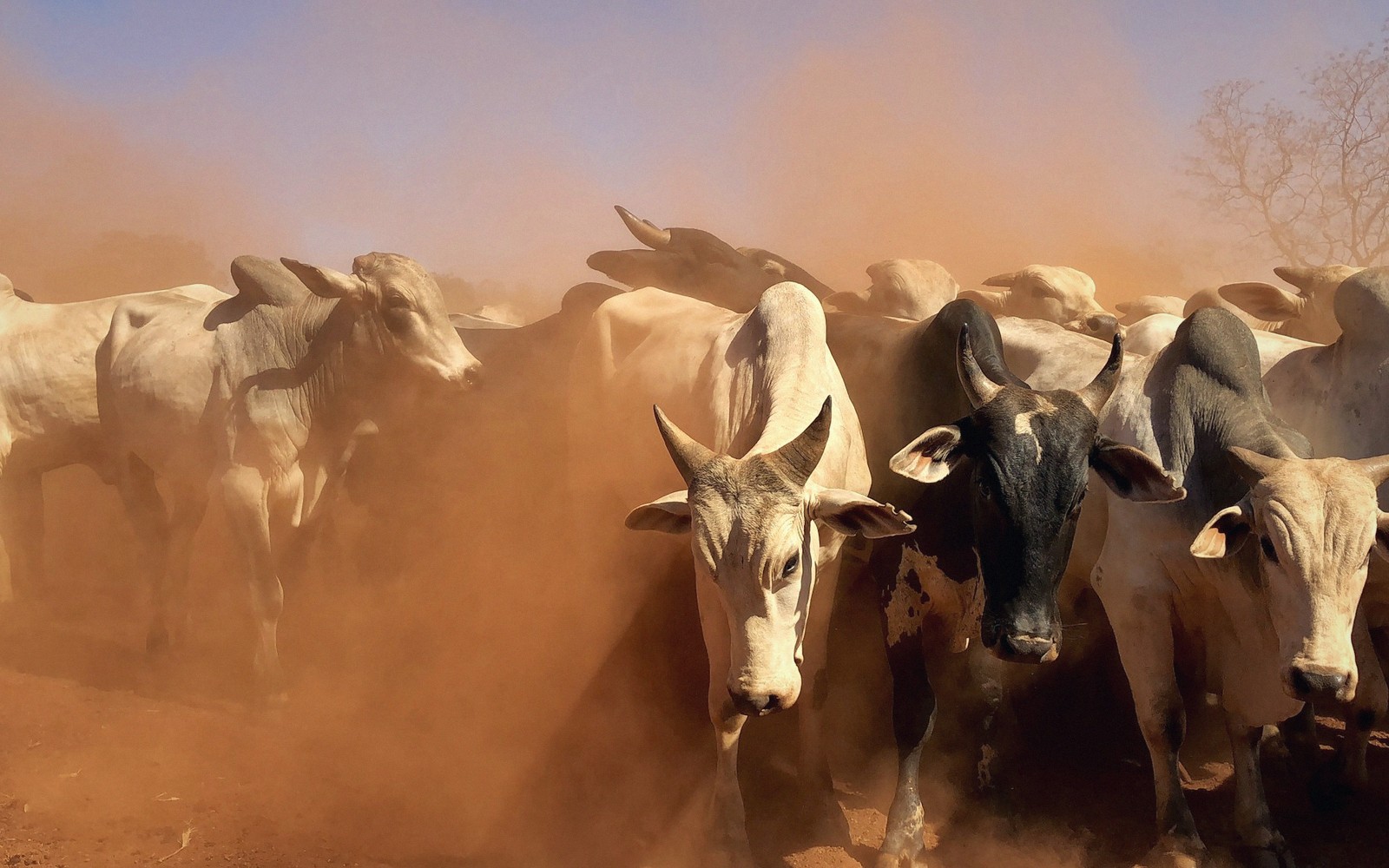
Built for the Land
The Boran is a medium-sized Bos indicus breed native to East Africa, and it thrives where many exotic breeds simply give up — in Kenya's semi-arid counties where water is scarce, pasture is seasonal and tick pressure is relentless. Generations of natural and selective breeding have produced an animal that combines heat tolerance and disease resistance with reasonable productivity, making it the preferred foundation animal for commercial ranchers across the drier rangelands.
What often gets overlooked in livestock farming is not the selling price but the cost of production. Research by the Tegemeo Institute of Agricultural Policy and Development found that zero-grazing dairy farmers in Kenya could spend up to Sh19 to produce a single litre of milk — a ratio that quietly bankrupted operations that looked profitable on paper. The Boran's advantage is precisely here: it forages efficiently on native pasture, converts feed well relative to its bodyweight, and carries lower maintenance costs than imported temperate breeds.
The logic, straightforward once stated, is that a cow yielding ten litres at low cost can return more to a farmer than one yielding thirty litres at punishing expense. Matching breed to environment — rather than chasing headline output figures — is what makes the numbers work.
A registered pedigree Boran bull can fetch around Sh300,000 at Kenya's livestock shows, a figure that reflects serious selective work over many generations. Breeders who exhibit them describe the process as methodical rather than mysterious: open-range grazing, weekly anti-tick spraying, regular foot-and-mouth treatments, and deworming every three months. A well-managed bull of 600 kilograms or more is the foundation of a breeding programme that can reshape a herd's performance over a decade.
For ranchers across northern Kenya and the broader semi-arid belt, the Boran is less a heritage curiosity than a practical answer to a hard environment — proof that the right animal in the right place is always the most efficient investment.
People & places in this pieceTegemeo Institute of Agricultural Policy and Development
Kenyan agricultural policy research body, affiliated with Egerton University