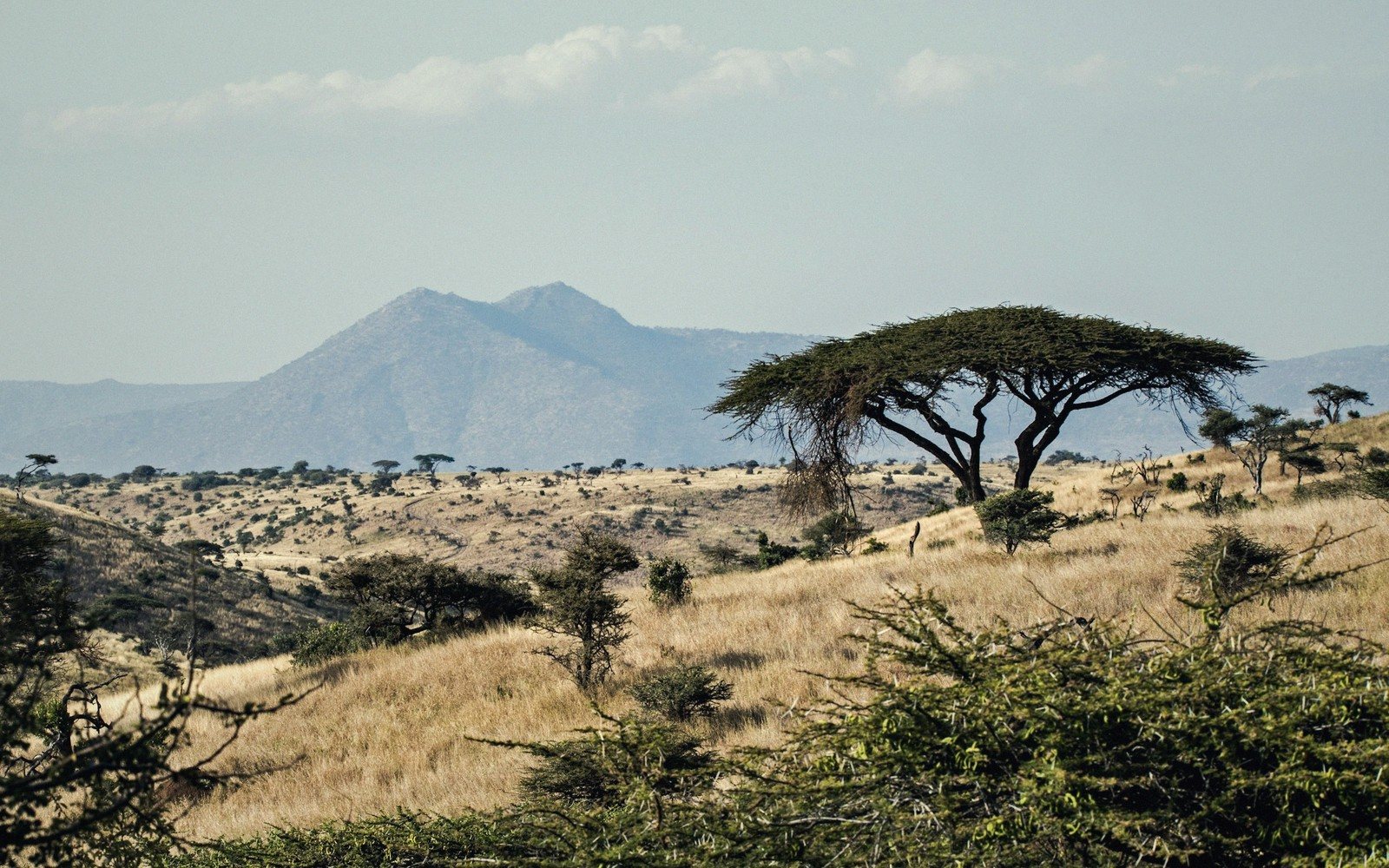
Where the road runs out
North of the equator, Kenya changes character entirely. The fertile highlands give way to a landscape of volcanic rock, pale dust and acacia scrub that stretches toward Ethiopia and South Sudan — vast, austere and startlingly beautiful. This is the Kenya that most travellers miss, and that rewards the ones who don't.
The anchor of the north is Lake Turkana, the world's largest permanent desert lake: a sheet of jade-green water sitting in a lava-strewn basin, fed by the Omo River from the north and almost nothing from the surrounding desert. Its shores hold some of the oldest hominin fossils ever found — Koobi Fora, on the lake's eastern bank, yielded discoveries that reshaped what we understand about human origins. The lake also generates its own weather: afternoon winds whip it into white-capped swells that have earned it the nickname the Jade Sea.
West of Turkana, the Turkana people — traditionally pastoralists and fishers — have occupied this harsh territory for centuries, reading its rhythms with a precision no map can match. To the east, Samburu, Rendille and Borana communities move their herds across the Kaisut and Chalbi deserts, following seasonal grazing routes that follow the rains. Camels are not exotic here; they are practical, load-bearing, milk-producing livestock, better suited to this terrain than any truck on a bad road.
The wildlife of the north has its own cast list. Reticulated giraffe, Grevy's zebra and the gerenuk — a long-necked antelope that browses standing upright on its hind legs — are species found here and almost nowhere else in the country. Samburu National Reserve, framed by the Ewaso Ng'iro river and its fringe of doum palms, is the most accessible gateway to this northern fauna.
At night, far from any city, the sky over the north is almost alarming in its clarity. The Milky Way arches overhead in genuine depth. Temperatures drop sharply. It is the kind of dark and quiet that reminds you how much noise the rest of the world makes.
Getting here takes effort — long drives on corrugated roads, or small charter flights into remote airstrips. That effort is, precisely, the point.
Lake Turkana
large desert lake in northwest Kenya; centre of ancient human history and living pastoral culture
Samburu National Reserve
northern Kenya reserve; habitat of species unique to the region
Koobi Fora
palaeontological site, eastern Lake Turkana; significant for early hominin finds
Turkana
pastoralist and fishing community of northwest Kenya